
What did you think about political parties?
The Question
What did you think about political parties?
Washington's Response
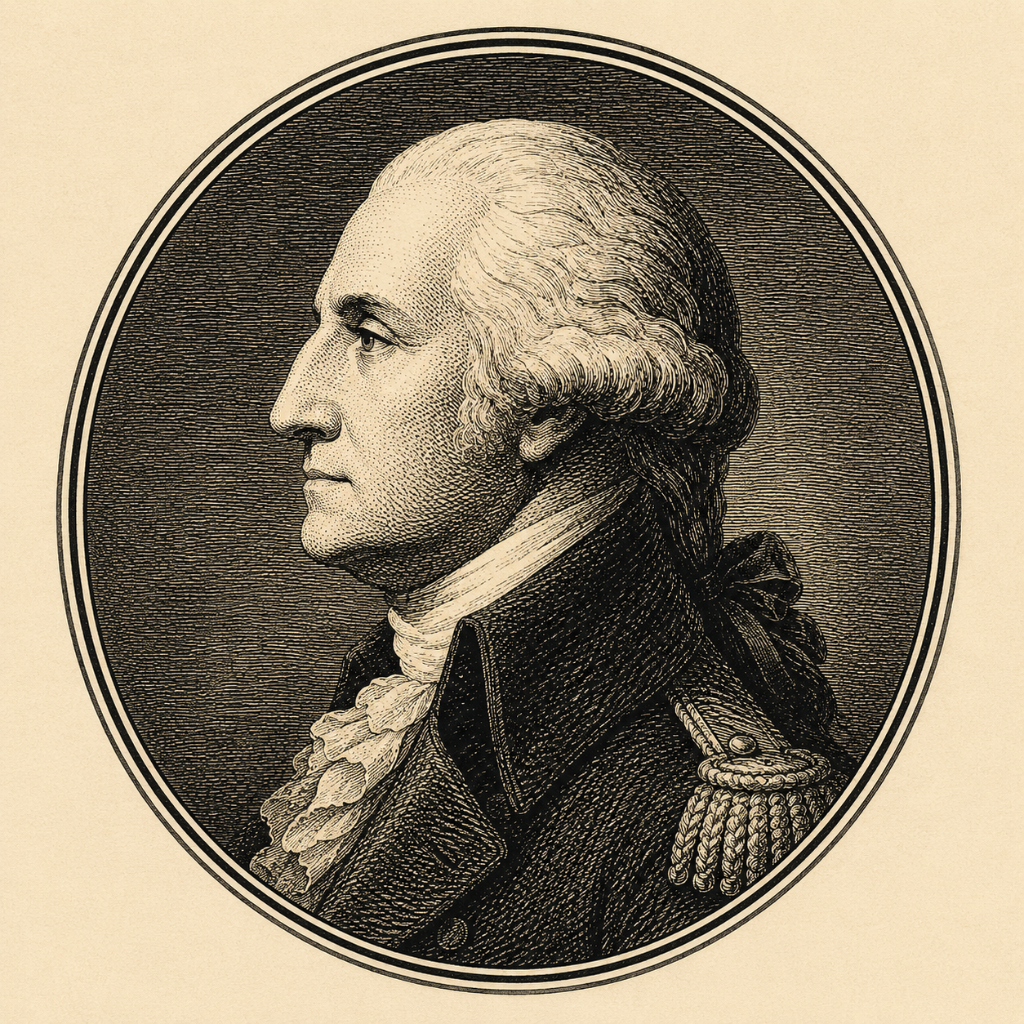
George Washington
First President of the United States
I viewed the spirit of party with the gravest concern, particularly in a government such as ours, founded upon the principles of popular sovereignty and republican liberty.
In my Farewell Address to the nation, I spoke at length on this matter, which I deemed of paramount importance to our political happiness. Let me share with you my sentiments:
I have already intimated to you the danger of parties in the state, with particular reference to the founding of them on geographical discriminations. Let me now take a more comprehensive view, and warn you, in the most solemn manner, against the baneful effects of the spirit of party generally. This spirit, unfortunately, is inseparable from our nature, having its root in the strongest passions of the human mind. It exists under different shapes, in all governments, more or less stifled, controlled or repressed: but in those of the popular form, it is seen in its greatest rankness, and is truly their worst enemy.
I recognized that some have argued that parties serve as useful checks upon administration, and in monarchical governments this may have merit. But in governments of popular character, purely elective as ours, the spirit of party is a dangerous flame that must be carefully guarded:
There is an opinion that parties in free countries are useful checks upon the administration of the government, and serve to keep alive the spirit of liberty. This, within certain limits, is probably true, and in governments of a monarchical cast, patriotism may look with indulgence, if not with favour, upon the spirit of party. But in those of the popular character, in governments purely elective, it is a spirit not to be encouraged. From their natural tendency it is certain there will always be enough of that spirit for every salutary purpose; and there being constant danger of excess, the effort ought to be by force of publick opinion, to mitigate and assuage it. A fire not to be quenched, it demands uniform vigilance to prevent its bursting into a flame, least instead of warming it should consume.
The mischiefs of party spirit are manifold and destructive:
Without looking forward to an extremity of this kind (which nevertheless ought not to be entirely out of sight) the common and continual mischiefs of the spirit of party are sufficient to make it the interest and duty of a wise people to discourage and restrain it. It serves always to distract the publick councils and enfeeble the publick administration. It agitates the community with illfounded jealousies and false alarms; kindles the animosity of one part against another, foments, occasionally, riot and insurrection. It opens the door to foreign influence and corruption, which find a facilitated access to the government itself through the channels of party passions. Thus the policy and the will of one country are subjected to the policy and will of another.
I witnessed firsthand how combinations and associations, under plausible pretexts, sought to control and counteract the regular deliberations of lawful authority:
all combinations and associations, under whatever plausible character, with the real design to direct, control, counteract, or awe the regular deliberation and action of the constituted authorities, are destructive of this fundamental principle, and of fatal tendency. They serve to organize faction, to give it an artificial and extraordinary force, to put in the place of the delegated will of the nation, the will of a party, often a small, but artful and enterprising minority of the community; and, according to the alternate triumphs of different parties, to make the publick administration the mirror of the ill concerted and incongruous projects of faction, rather than the organ of consistent and wholesome plans, digested by common councils, and modified by mutual interests.
As for my own conduct, I endeavored always to stand above party considerations. I once wrote:
I was no believer in the infallibility of the politics or measures of any man living. In short, that I was no party man myself, and the first wish of my heart was, if parties did exist, to reconcile them.
During my administration, I witnessed with sorrow the growing divisions between men of ability and patriotism who shared common objects yet could not exercise charity toward one another:
Differences in political opinions are as unavoidable, as, to a certain point, they may perhaps be necessary; but it is exceedingly to be regretted, that subjects cannot be discussed with temper on the one hand, or decisions submitted to without having the motives, which led to them, improperly implicated on the other.
I regarded the internal dissensions within my own Cabinet as among the most afflicting trials of my presidency:
How unfortunate, how much to be regretted then, that while we are encompassed on all sides with avowed enemies, and insidious friends, internal dissections should be harrowing and tearing our vitals.
In short, while I understood that differences of opinion are natural and to some degree inevitable among free men, I viewed the organized spirit of party—particularly when it hardens into permanent faction—as one of the greatest threats to republican government and to the Union itself.
Primary Sources Used
Address to The People of the United States, September 17, 1796
An Essay on the Life of George Washington · Vol. BANCROFT · p. 476
"I have already intimated to you the danger of parties in the state, with particular reference to the founding of them on geographical discriminations. Let me now take a more comprehensive view, and warn you, in the most solemn manner, against the baneful effects of the spirit of party generally. This spirit, unfortunately, is inseparable from our nature, having its root in the strongest passions of the human mind. It exists under different shapes, in all governments, more or less stifled, controlled or repressed: but in those of the popular form, it is seen in its greatest rankness, and is truly their worst enemy."
Address to The People of the United States, September 19, 1796
An Essay on the Life of George Washington · Vol. BANCROFT · p. 485
"There is an opinion that parties in free countries are useful checks upon the administration of the government, and serve to keep alive the spirit of liberty. This, within certain limits, is probably true, and in governments of a monarchical cast, patriotism may look with indulgence, if not with favour, upon the spirit of party. But in those of the popular character, in governments purely elective, it is a spirit not to be encouraged. From their natural tendency it is certain there will always be enough of that spirit for every salutary purpose; and there being constant danger of excess, the effort ought to be by force of publick opinion, to mitigate and assuage it. A fire not to be quenched, it demands uniform vigilance to prevent its bursting into a flame, least instead of warming it should consume."
Address to The People of the United States, September 19, 1796
An Essay on the Life of George Washington · Vol. BANCROFT · p. 485
"Without looking forward to an extremity of this kind (which nevertheless ought not to be entirely out of sight) the common and continual mischiefs of the spirit of party are sufficient to make it the interest and duty of a wise people to discourage and restrain it. It serves always to distract the publick councils and enfeeble the publick administration. It agitates the community with illfounded jealousies and false alarms; kindles the animosity of one part against another, foments, occasionally, riot and insurrection. It opens the door to foreign influence and corruption, which find a facilitated access to the government itself through the channels of party passions. Thus the policy and the will of one country are subjected to the policy and will of another."
Address to The People of the United States, September 17, 1796
An Essay on the Life of George Washington · Vol. BANCROFT · p. 482
"all combinations and associations, under whatever plausible character, with the real design to direct, control, counteract, or awe the regular deliberation and action of the constituted authorities, are destructive of this fundamental principle, and of fatal tendency. They serve to organize faction, to give it an artificial and extraordinary force, to put in the place of the delegated will of the nation, the will of a party, often a small, but artful and enterprising minority of the community; and, according to the alternate triumphs of different parties, to make the publick administration the mirror of the ill concerted and incongruous projects of faction, rather than the organ of consistent and wholesome plans, digested by common councils, and modified by mutual interests."
Letter to Thomas Jefferson, July 1, 1796
The Writings of George Washington · Vol. XI · p. 139
"I was no believer in the infallibility of the politics or measures of any man living. In short, that I was no party man myself, and the first wish of my heart was, if parties did exist, to reconcile them."
Letter to Unknown, January 1, 1792
The Writings of George Washington · Vol. X · p. 284
"Differences in political opinions are as unavoidable, as, to a certain point, they may perhaps be necessary; but it is exceedingly to be regretted, that subjects cannot be discussed with temper on the one hand, or decisions submitted to without having the motives, which led to them, improperly implicated on the other"
Letter to Thomas Jefferson (Secretary of State), August 1, 1792
An Essay on the Life of George Washington · Vol. BANCROFT · p. 405
"How unfortunate, how much to be regretted then, that while we are encompassed on all sides with avowed enemies, and insidious friends, internal dissections should be harrowing and tearing our vitals."
Historical Themes
Related Conversations
Have a question for the General?
Ask George Washington